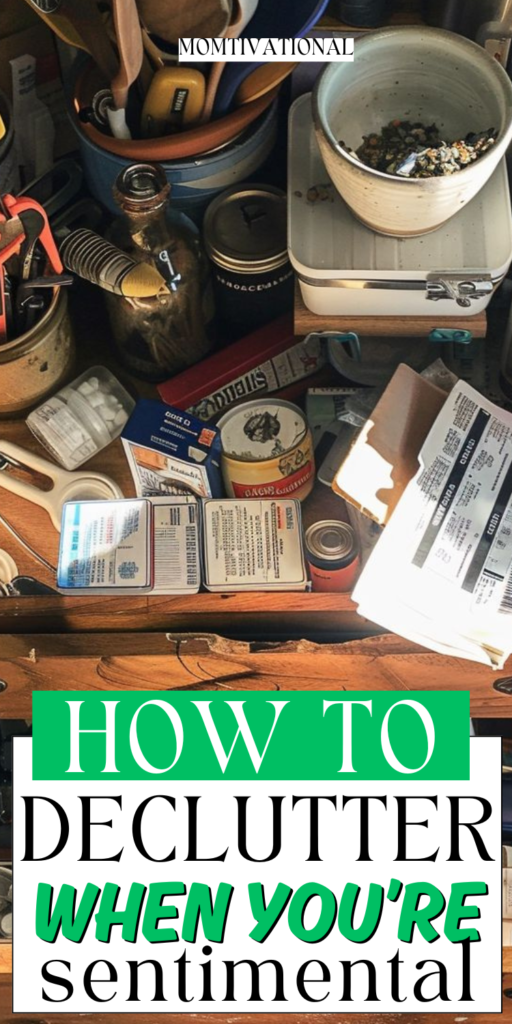
Last Saturday I stood in my kitchen, staring at a junk drawer that wouldn’t even close anymore. My kids were asking for snacks, my dog was barking at literally nothing, and I just snapped. I was like, that’s it. I’m throwing everything away. Fresh start. New me.
Five minutes later I was sitting on the floor holding a random charger and a broken pen thinking… wait what if I need this?
That right there is the problem.
You want the clean house. You want the space. You want to open a drawer and not feel annoyed before your day even starts. But when it’s time to actually get rid of things, your brain suddenly has a thousand reasons to keep it all.
So you try to declutter.
You pull stuff out.
You make a pile.
You get overwhelmed.
You stop.
Then you shove it all back and tell yourself you’ll do it later.
And later never comes.
I used to think this meant I was just bad at this. Like maybe some people are naturally organized and I just… wasn’t one of them. But that’s not really what’s going on.
This isn’t laziness.
It’s that every single item turns into a decision. And not just a quick one either. It’s “what if I need it,” “I spent money on this,” “this was a gift,” “this reminds me of…” all happening at once.
That’s a lot for your brain to deal with over and over again.
No wonder you shut down halfway through a drawer.
Why You Feel Like You Can’t Declutter (Even When You Want To)
If you’ve ever looked around your house and thought “why can’t I just get rid of this stuff already?”… yeah, same.
It feels like it should be simple. Pick it up, decide, move on. But somehow it turns into this whole thing in your head and now you’re standing there overthinking a spatula you haven’t used in three years.
There’s a reason for that.
The “I Might Need It Someday” Trap
This one gets me every time. I’ll hold onto the most random things just in case. Like extra cords, old containers, clothes that don’t fit right now but might one day.
But if I’m being honest… half the stuff I keep “just in case” I don’t even remember I have.
So what’s the point?
You May Also Like: 10 Tips For Decluttering Clothes (Painlessly!)
The Guilt That Sneaks In
This one hits a little harder.
You spent money on it.
Someone gave it to you.
It still works perfectly fine.
So now getting rid of it feels… wrong. Like you’re wasting something or being ungrateful.
I’ve kept things way longer than I should have just because of that. Even stuff I didn’t even like. Which is kind of ridiculous when you say it out loud, but in the moment it feels real.
Holding On to Who You Were… or Who You Think You’ll Be
This one is sneaky.
It’s not always about the item. It’s about what it represents.
Old clothes from a different phase of life.
Hobby stuff you swore you’d get back into.
Things for the “future version” of you who has more time, more energy, more everything.
Meanwhile, real life is happening right now. And that version of you? She’s not using that stuff.
The “I Have to Do It All at Once” Pressure
This is the fastest way to get stuck.
You tell yourself you’re going to clean out the whole house. Every room. Every closet. Today.
So you start… and then you hit decision fatigue in like 20 minutes.
Then you quit.
I’ve done this more times than I can count. I’d get a burst of motivation, go way too big, burn out, and then not touch it again for weeks.
So if you feel like you “can’t” declutter, it’s not that you actually can’t.
It’s that your brain is dealing with way more than just “keep or toss.”
The Emotional Stuff That Makes It Way Harder
This is the part no one really talks about enough.
Decluttering isn’t just about stuff. It’s about feelings. And sometimes those feelings hit out of nowhere while you’re just trying to clean out a closet.
Sentimental Attachment Is Real
Some things are just… hard.
Kids artwork. Old cards. Random little things that don’t look like much but somehow mean everything.
I have a bin in my closet that I avoid opening because I already know what’s in there. Baby socks, hospital bracelets, little notes. I tell myself I’ll go through it one day. Not today though.
It’s not logical. It’s emotional.
And that’s why it feels so heavy.
Grief and Life Changes Get Tied Into Your Stuff
Sometimes it’s deeper than just memories.
Things from people you lost.
Stuff from a past relationship.
Things from a version of your life that doesn’t exist anymore.
Even good changes can make this hard. Like after having kids, I had all these clothes and things from my old life and I didn’t even know what to do with them. I wasn’t that person anymore, but getting rid of it felt weird.
Like closing a door or something.
The Fear That You’ll Regret It
This one keeps a lot of stuff in our houses.
“What if I need it later?”
“What if I regret getting rid of it?”
So you keep it. Just in case.
But then it sits there. Taking up space. Adding to the mess. And most of the time… you never touch it again.
I’ve decluttered a lot over the years and honestly? I can count on one hand the things I actually regret getting rid of. And even those weren’t a big deal in the end.
The fear feels bigger than the reality.
And when you add all of this together, it makes sense why decluttering feels so hard sometimes. It’s not just cleaning. It’s letting go.
The Practical Stuff That Gets in the Way
And then there’s the part that has nothing to do with feelings… but still stops you cold.
There’s Just… Too Much Stuff
At some point it’s not about one drawer anymore.
It’s closets. Cabinets. Storage bins. The garage. That random corner where things just end up.
Years of stuff adds up fast. Especially with kids. I swear things multiply overnight in this house. Toys, papers, clothes they outgrow in five seconds.
So when you finally decide to deal with it, it feels like you’re staring down a mountain.
And your brain goes… yeah, not today.
You Don’t Actually Have a System
Most of us were never taught how to declutter.
So we just wing it.
We start pulling things out, making piles, second guessing every decision, getting distracted halfway through… and then nothing really gets finished.
It’s not that you can’t do it. You just don’t have a clear way to move through it.
So everything takes longer, feels harder, and you burn out faster.
You’re Tired and Busy
This one is very real.
Between work, kids, cooking, laundry, trying to have some kind of life… decluttering falls way down the list.
By the time you have a minute to even think about it, you’re already exhausted.
And decluttering takes energy. Not just physical, but mental too. All those decisions add up quick.
So you put it off.
Not because you don’t care. But because you just don’t have it in you that day.
And this is the part that matters most.
You don’t fix any of this by waiting until you feel more motivated.
You fix it by making the process easier to follow.
Stop Trying to Declutter Everything at Once
This was the biggest mistake I kept making.
I would wake up one day super motivated, drink my coffee, look around the house and decide… today is the day. I’m doing the whole thing. Closets, kitchen, kids rooms, all of it.
And for like 30 minutes? I was on fire.
Then it hit.
Too many decisions. Too much stuff everywhere. Half-finished piles all over the place. Kids asking me questions while I’m holding up two random objects trying to figure out my life.
And then I’d quit.
Every single time.
That “all or nothing” mindset sounds productive, but it actually does the opposite. It makes everything feel bigger than it needs to be, and your brain just taps out.
So instead of trying to do everything…
Shrink it.
Pick one small space. One drawer. One shelf. One pile that you can actually finish.
That’s it.
Not because it’s all you’re capable of. But because finishing something matters more than starting ten things and finishing none of them.
And here’s the part that really changed things for me.
Decluttering isn’t one big event.
It’s a bunch of tiny decisions stacked on top of each other.
That’s all it is.
You’re not “decluttering your house.”
You’re deciding what to do with one item. Then the next. Then the next.
When you start looking at it like that, it feels way less overwhelming.
And way more doable.
Step 1: Start Small (Build Momentum)
I know this sounds almost too simple. Like… really? One drawer?
But this is the step most people skip. And it’s the reason everything else falls apart.
Because when you start too big, you don’t finish. And when you don’t finish, it feels like you didn’t do anything at all.
So next time you feel that urge to “finally get your life together” and declutter the whole house… don’t.
Pick something small on purpose.
A junk drawer.
One kitchen cabinet.
That random pile on the counter you keep moving around.
Something you can finish in one go, even if your kid interrupts you five times and the dog needs to go out.
That’s the goal. Finished, not perfect.
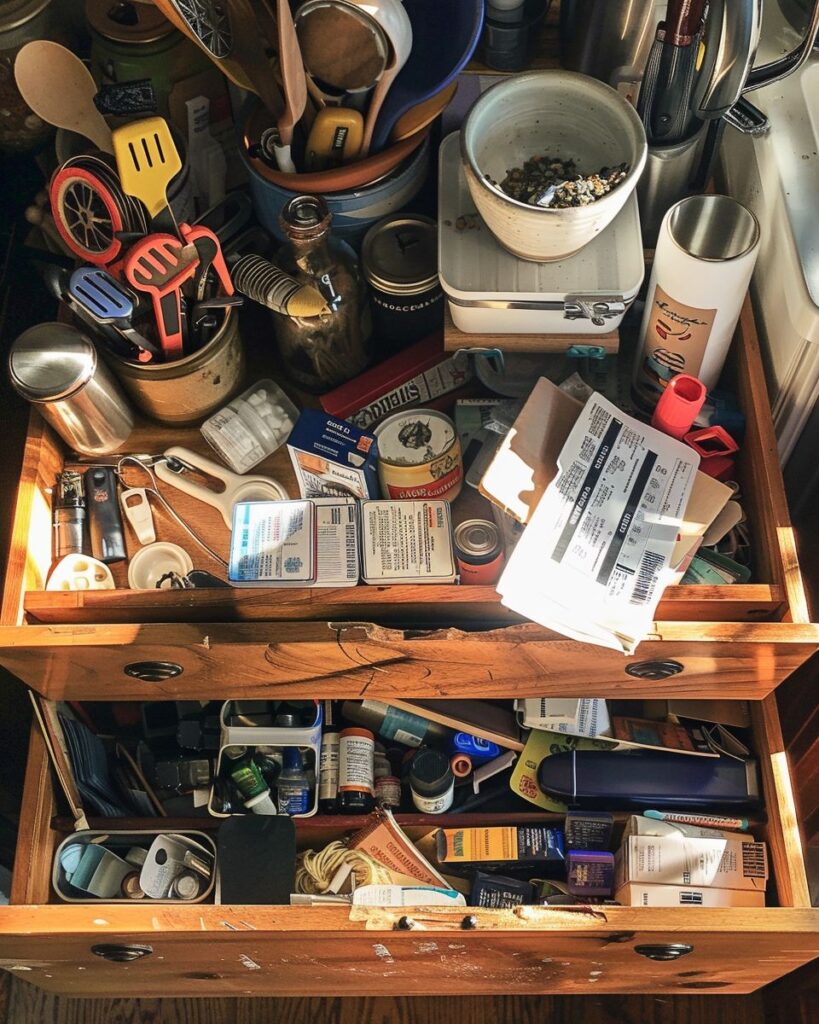
I started with my junk drawer, and I’m not even kidding, it took like 15 minutes. But after that? I kept opening it just to look at it. It felt so much better.
That little win did more for my motivation than any big “clean the whole house” plan ever did.
Because now your brain has proof.
“Oh… we can actually do this.”
And once you get that feeling, it gets a whole lot easier to keep going.
Step 2: Start Easy (Train Your Brain)
Once you pick your small space, don’t go straight for the hard stuff.
This is where I used to mess up. I’d open a drawer and immediately grab the one thing that made me pause. Then I’d sit there thinking way too long about it… and lose all my momentum.
So now I don’t do that.
I look for the easy wins first.
Trash.
Broken stuff.
Duplicates.
Things I already know I don’t like or don’t use.
No thinking. Just move it out.
It might feel like you’re not doing much at first, but you are. You’re training your brain to make decisions faster without all the overthinking.
And that matters more than you think.
Because the real problem isn’t the stuff. It’s how long it takes to decide what to do with it.
The more quick decisions you make, the easier the next ones feel.
It’s kind of like cleaning out your fridge. You don’t start by debating the sauce you might use someday. You toss the expired stuff first and keep it moving.
Same idea here.
Get the obvious things out of the way, and suddenly the space already looks better. And you’re still in a groove instead of stuck.
Read Next: 40 Bags in 40 Days Declutter Challenge Changed My Home in Weeks
Step 3: Flip the Question
This one sounds small, but it changes everything.
Most of us go into decluttering thinking:
“What should I get rid of?”
And without even realizing it, that makes you defend every single item.
You start justifying things.
“Well I could use this…”
“It still works…”
“I might need it later…”
So now everything has a reason to stay.
No wonder it takes forever.
Instead, flip it.
Ask yourself:
“What do I actually want to keep?”
Now you’re choosing on purpose.
You’re picking the things you use, the things you like, the things that actually make your life easier right now.
Everything else? It’s not as important anymore.
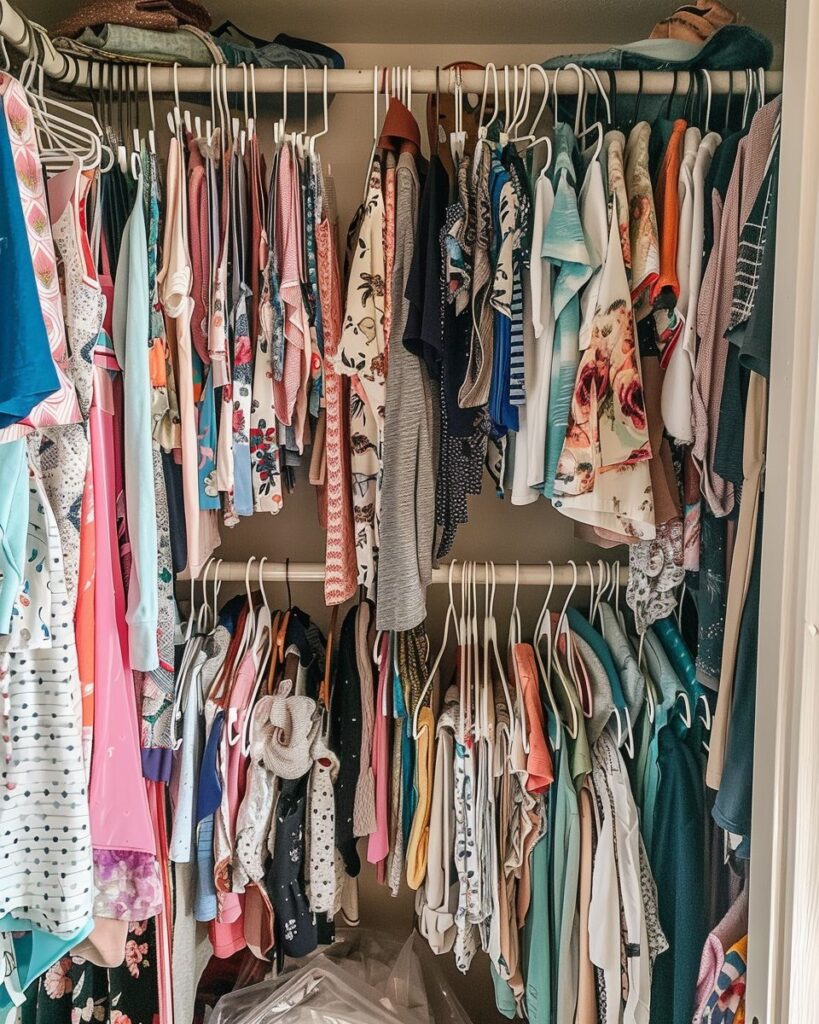
I did this with my closet and it was kind of eye opening. I pulled out the clothes I actually reach for every week. Not the “someday” outfits, not the stuff that almost fits, not the things I feel guilty about.
Just the real life stuff.
And what was left hanging there… I didn’t even care about as much as I thought I did.
When you switch the question, you stop trying to save everything.
And you start building a space around what actually works for you.
Step 4: Use Fast Decisions
This is where things usually slow way down.
You pick something up… and just stand there.
Thinking.
Overthinking.
Second guessing.
And now you’ve lost your momentum over one random item.
So here’s the rule I use now:
If it’s not a clear yes, it’s a no. Or at least a not right now.
That doesn’t mean you have to throw it away instantly. It just means you don’t let one item hold you hostage for five minutes.
Because that’s how the whole process falls apart.
And for the stuff that really trips you up, this helps a lot.
Keep a “don’t know” bin nearby.
No thinking, no debating. Just toss it in there and keep moving.
I use a random laundry basket for this and it saves me every time. Otherwise I’d get stuck on things like old cords or weird kitchen gadgets and then suddenly I’m sitting on the floor scrolling my phone instead of decluttering.
The goal here isn’t to make perfect decisions.
It’s to keep moving.
You can always go back to the “don’t know” pile later when your brain isn’t tired and you’re not in the middle of everything.
But right now? Speed matters more than perfection.
Step 5: Stop Organizing (Declutter First)
This one might sting a little.
Because organizing feels productive.
You buy bins. You label things. You move stuff around and make it look nice. And for a minute, it actually does look better.
But if you didn’t get rid of anything… you didn’t really fix the problem.
You just hid it better.
I used to do this all the time. I had cute baskets, drawer dividers, all the things. But every space was still packed. So even though it looked organized, it was still stressful to use.
I was basically just shuffling clutter around.
Organizing is great, don’t get me wrong. But it only works after you’ve removed what doesn’t belong.
Decluttering means less stuff.
Less to clean.
Less to move around.
Less to think about.
And then, once you’ve done that, organizing actually works. Because now you’re giving the right things a place, not trying to squeeze everything in.
So before you buy another bin or try to “fix” a space…
Take stuff out first.
Otherwise you’re just putting lipstick on a problem that’s still there.
Step 6: Use Boundaries (Container Method)
This is one of the easiest ways to stop things from getting out of control again.
Instead of trying to decide how much you should keep… let the space decide for you.
Pick a boundary.
A drawer.
A bin.
A shelf.
That space is for one category only. Like t-shirts, snacks, kids art supplies, whatever it is.
And once it’s full… that’s it.
It doesn’t magically expand just because you bought more stuff.
So if something new comes in, something else has to go.
I started doing this with my kids toys because I was losing my mind. We had toys everywhere. So I gave them each a bin for certain things. When the bin filled up, we had to pick what stayed and what didn’t.
At first they pushed back, obviously. But now it’s just normal. And honestly it makes cleanup so much easier.
Same thing works for your stuff too.
Your closet can only hold so many clothes. Your kitchen only has so much space. When you respect those limits, you stop overfilling everything.
It takes the pressure off making the “perfect” decision.
You’re just making the space work.
Step 7: Reduce the Emotional Weight
This is where things can get heavy if you let it.
Because sometimes it’s not about the item at all. It’s what it means.
So instead of forcing yourself to just “be stronger” and toss it… it helps to make it a little easier on your brain.
Let It Have Its Moment
Some things really did matter at one point.
Clothes you loved. Baby stuff. Gifts. Things you used all the time in a different season of life.
It’s okay to admit that.
You can literally say to yourself, this was great for me back then, and that’s enough. It did what it needed to do.
You don’t have to keep it forever to prove it mattered.
Take a Photo Instead
I do this way more than I thought I would.
If something feels hard to let go of but I don’t actually need it, I snap a quick picture.
Now I still have the memory, but it’s not taking up space in my house.
I’ve done this with kids artwork, little keepsakes, even random things that just felt sentimental for no real reason.
It helps more than you’d think.
Keep the Best, Not All of It
You don’t need ten things to remember one moment.
Pick your favorite. The one that actually means something when you look at it.
The rest… you’re not really going back to anyway.
I had a stack of my kids drawings at one point. Like a full stack. Now I have a small folder with just the ones that really make me smile.
That feels a lot better.
If It Helps, Say Goodbye in Your Own Way
Some people like to actually thank the item before letting it go.
I don’t do it every time, but I get why it works.
It gives your brain a sense of closure. Like you’re not just tossing something, you’re finishing that chapter.
If that feels weird to you, skip it. If it helps, use it.
There’s no one right way to do this part.
The goal isn’t to feel nothing.
It’s to not let the feeling stop you completely.
Step 8: Get Out of the “Someday” Trap
This one keeps so much stuff stuck in our houses.
“Someday I might need this.”
“Someday I’ll use it.”
“Someday I’ll fit into it again.”
But let’s be real for a second.
If you haven’t used something in years… you’re probably not going to.
I had a pasta maker sitting in my cabinet for way too long. In my head I was like, one day I’m gonna get into this, make fresh pasta, be that person.
It never happened.
Not once.
And every time I opened that cabinet, it just sat there taking up space.
At some point you have to be honest about your real life, not your “maybe someday” life.
Because that version of you? She’s not the one dealing with your clutter right now.
And here’s a better way to think about it.
Instead of asking, what if I need this later…
Ask, who could use this right now?
That shift makes it so much easier.
Because now you’re not just letting something go. You’re giving it a chance to actually be used.
Which is kind of the whole point anyway.
Step 9: Use Simple Methods So You Don’t Overthink It
When you’re already overwhelmed, the last thing you need is a complicated system.
So keep it simple.
You don’t need a perfect plan. You just need something that keeps you moving.
The 12-12-12 Method
This one is actually kind of fun.
Find:
- 12 things to throw away
- 12 things to donate
- 12 things to put back where they belong
That’s it.
It gives you a clear stopping point, which helps a lot when your brain is like… how long are we doing this?
And most of the time, once you get going, you’ll end up doing more anyway.
The 3-Box Method
This is my go-to.
Grab three bins, baskets, or honestly just grocery bags.
One for:
- Keep
- Donate or sell
- Trash
As you go through stuff, don’t overthink it. Just put it where it belongs and keep moving.
It keeps everything from piling up into one big mess on the floor.
The Test Box Trick
This one is for the things you’re not sure about.
Put those items in a box, stick it somewhere out of the way, and set a reminder on your phone for like a month.
If you haven’t gone looking for anything in that box… you already have your answer.
You didn’t need it.
I’ve done this a few times and every time I open that box later I’m like, why did I even keep this?
It’s a really easy way to let go without the pressure in the moment.
None of these are fancy. And that’s the point.
Simple works better when your brain is already tired.
Step 10: Make It Stick (So You Don’t End Up Back Here)
This is the part people forget.
You declutter, things feel amazing for a minute… and then slowly, stuff starts creeping back in.
And suddenly you’re right back where you started.
So the goal isn’t just to clean it out once. It’s to keep it from building up again.
Do Quick Check-Ins Every Season
You don’t need some big weekend cleanout every time.
Just once every few months, walk through your house and look for things that don’t belong anymore.
Stuff you’re not using.
Things that piled up.
Random clutter that just… showed up.
I usually do this when the seasons change. It’s not a huge project, just a reset.
Even getting rid of a few things each time makes a difference.
Everything Needs a Home
If something doesn’t have a place, it’s going to end up on your counters.
Or your table. Or that one chair that collects everything.
So after you declutter, make sure what’s left actually has a spot.
Not a temporary spot. A real one.
That way when you’re cleaning up, you’re not guessing where things go. You just put them back.
And your house stays way easier to manage.
Pay Attention to What Comes In
This is the one that changed everything for me.
Because you can declutter all you want, but if stuff keeps coming in at the same rate… nothing really changes.
Now I pause before I buy things.
Do I actually need this?
Do I have space for it?
Am I just bored and shopping?
I’m not perfect with this at all. Target still gets me sometimes. But being more aware has helped a lot.
Because it’s way easier to keep stuff out than it is to deal with it later.
You don’t need to be perfect at any of this.
You just need a few simple habits that keep things from piling up again.
The Mindset That Actually Makes This Work
Here’s the part I wish someone told me sooner.
You’re not supposed to be good at this right away.
Decluttering is a skill. And like anything else, it gets easier the more you do it.
At first, every decision feels hard. You second guess everything. You take forever. That’s normal.
But after a while, you start to notice it.
You make decisions faster.
You care less about the “maybe someday” stuff.
You don’t get as stuck.
It just clicks more.
You Don’t Need to Be Ruthless
I used to think I had to turn into one of those people who just throws everything away without thinking.
That’s not me. And honestly, it doesn’t have to be you either.
You don’t need to be harsh or extreme.
You just need to keep showing up and making small decisions over time.
Some days you’ll do a lot. Some days you won’t do anything at all.
That’s fine.
Consistency matters way more than one big cleanup day.
Your Version of “Enough” Is Yours
Not everyone wants a super minimal house.
Some people like more stuff. Some people like less.
There’s no perfect number of things you’re supposed to own.
The goal is just this.
When you look around your home, does it feel manageable? Can you find what you need? Are you constantly stressed by the mess?
If the answer is no, then something needs to change.
If the answer is yes, then you’re doing it right.
Your home doesn’t have to look like anyone else’s.
It just has to work for you and your life right now.
What You’re Actually Trying to Get Out of This
At first I thought decluttering meant having less stuff.
Like that was the goal. Just own less.
But honestly? That’s not really why I kept trying to do this over and over again.
It was because I was tired.
Tired of cleaning around things.
Tired of moving stuff just to wipe a counter.
Tired of opening a closet and feeling annoyed before I even found what I needed.
It wasn’t about the stuff. It was about how it made my day feel.
Less Stress (Like, Immediately)
When there’s less stuff everywhere, your brain chills out a little.
You’re not constantly scanning mess. You’re not getting distracted by things that need to be dealt with.
It’s quieter. Not literally, because kids… but mentally.
Less Time Managing Your House
This one is huge.
When you have less stuff, everything takes less time.
Cleaning is faster.
Putting things away is easier.
You’re not reorganizing the same space every two weeks.
I used to feel like I was always cleaning, but nothing stayed clean. Now it actually sticks longer.
Which is nice because I’d rather be doing literally anything else.
More Space You Can Actually Use
Not just empty space for the sake of it.
But space you can live in.
Counters you can cook on without clearing them first.
A table that’s ready for dinner without moving piles.
A floor that isn’t covered in random things.
It makes your house feel bigger without changing anything.
More Mental Breathing Room
This one surprised me the most.
When your house feels lighter, you feel lighter.
You’re not carrying around this constant “I need to deal with that” in the back of your mind.
It doesn’t fix everything. Life is still busy, kids are still chaotic, the dog still tracks sand in from the backyard…
But it takes one layer of stress off.
And that adds up.
So yeah, it’s not really about having less stuff.
It’s about making your day feel a little easier.
You Don’t Have to Do This All Today
If you take nothing else from this, take this.
You do not need to fix your whole house today.
You don’t need a full weekend. You don’t need perfect motivation. You don’t need to wait until life “calms down” because honestly… when does that ever happen?
You just need to start once.
One drawer.
One pile.
One small decision.
That’s it.
I still have areas in my house that aren’t perfect. There’s probably a random cabinet right now that I haven’t touched in months. And that’s fine.
Because the difference now is I don’t feel stuck anymore.
I know I can handle it when I get to it.
And that’s what this really gives you.
Not a perfect house. Not some unrealistic version of life where everything stays spotless all the time.
Just a home that feels easier to live in.
And it happens slowly.
One small decision at a time.
So if you’re sitting there thinking about where to start…
Go open one drawer.
Not later. Not this weekend.
Just once.